

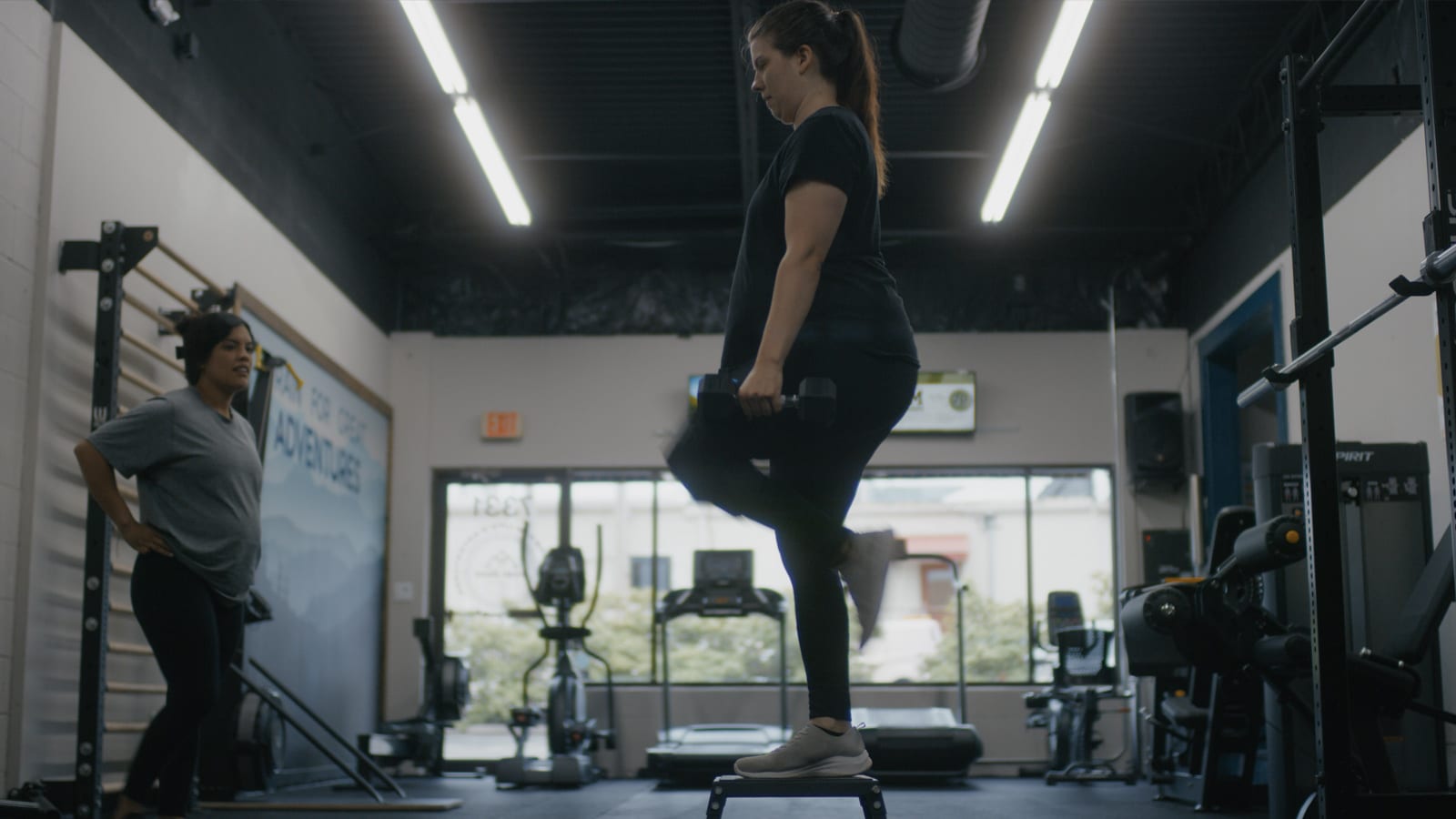
Knee Stability: Why It Matters and How to Protect Your Knees
Why Knee Stability Is Important
Knee stability is essential for everyday movements and staying active without pain. One common issue we see at Front Door Fitness is called valgus knee collapse—when the knees cave inward during activities like squatting, bending, or landing from a jump.
This movement pattern puts extra stress on your knees and can lead to problems not only in the knees but also in your ankles and feet—sometimes causing issues like plantar fasciitis (chronic foot pain).
Why Does Knee Pain Happen?
Often, the spot where you feel pain isn’t where the problem began. Our bodies are very good at compensating for weak or tight muscles elsewhere. Over time, these compensations place extra strain on joints, leading to discomfort or injury.

How to Avoid Valgus Knee Collapse
The key muscle for preventing this inward knee movement is the Gluteus Medius, located on the side of your hip. This muscle helps move your leg away from the body’s midline and provides important knee stability. Unfortunately, the Gluteus Medius is often weak or underused.
At FDF, we focus first on “turning on” this muscle through specific neuromuscular training—teaching your brain and muscles to work together. Then, we build strength, so your knees stay properly aligned during movement.
Additional Tips if You Have Knee Pain
If you experience chronic knee or lower leg pain, consider using a foam roller to loosen the Tensor Fasciae Latae (TFL)—a muscle on the side of your hip that often tightens up when the Gluteus Medius is weak. Loosening the TFL while strengthening the Gluteus Medius can help reduce pain and improve movement.
If your pain persists, it’s a good idea to have it evaluated by a professional. With proper coaching and effort, you can improve your knee stability, reduce discomfort, and keep moving stronger for years to come.
– FDF Trainer.